
Outcome NR7
Birds of prey breed successfully in numbers which reflect habitat availability
Hen harriers were driven to extinction in mainland Britain in the 19th century and have remained rare since recolonising England in the 1960s. This is due to illegal persecution and disturbance, primarily in areas associated with grouse shooting [44]. For the first time in over 100 years more than 100 hen harriers fledged from nests in England in 2022, including from seven nests in the North Pennines. This is a welcome increase on a low of zero nests in England in 2013, but not all recorded nests were successful (though some would have been lost to natural causes), and some failures were subsequently investigated by police. According to a government report [45] there is enough suitable habitat in England (6,636 km2) for more than 300 pairs of hen harriers. The North Pennines contains a significant proportion of that habitat.
Peregrine falcon numbers are increasing in lowland and coastal areas of England, and especially in cities, but still declining in upland areas of the UK [46]. There are likely to be multiple factors involved in this decline, but there is compelling evidence that illegal persecution on land associated with grouse moor management has been a major factor [64,65].
As apex predators, hen harrier and peregrine falcon will regulate the abundance of meso-predators. This will have a cascade effect on the abundance of small herbivores, passerines and gamebirds and consequently on other predators and on vegetation control. These interactions are complex and hard to untangle from the influences of meso-predator control by gamekeepers, but there is good evidence from elsewhere that the presence of apex predators introduces complexity and resilience into ecosystems.
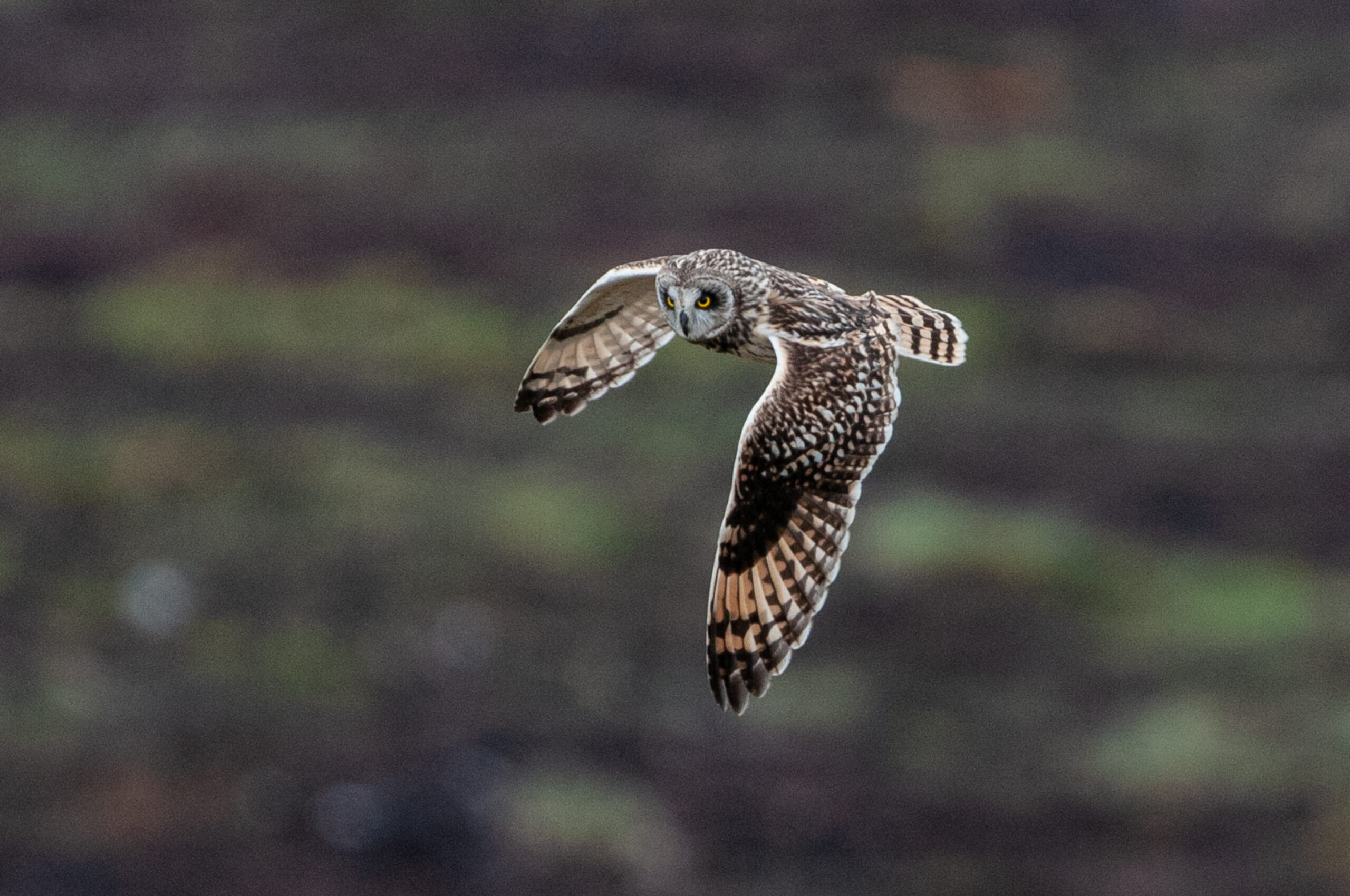
Short-eared owl is a specialist predator of small mammals, primarily voles, and as such its population fluctuates in relation to the cyclical populations of its food source. However even in good vole years continued evidence of persecution of short-eared owl means they may not be reaching their population potential.
Dispersal of populations of Golden and White-tailed eagle from growing populations in Scotland and from re-introduction schemes means these birds will also be seen more commonly in the sky above the North Pennines, and will also benefit from some of the measures below. There is potential for licensing for White-tailed eagle reintroduction during the lifetime of this plan, which, when delivered following robust evidence and measures to support resilient livestock farming, bring economic and ecological benefits to the area.
This Outcome also includes Raven, that is also likely to be subject to persecution.
Which species are supported by this outcome?
Champion species
Hen harrier, Peregrine falcon
Annex 1 species
Merlin
Other species of note
Short-eared owl, Raven, White-tailed eagle, Golden eagle
Measures for outcome NR7
Select each measure for its full detail and to view the organisations and groups with an important role in making them happen.
Collaborate (landowners, agents, gamekeepers, RSPB, Natural England, bird researchers, police) to ensure illegal activity is detected, reported and stopped.
| Farmers & land managers | Conservation bodies | National and/or local government |
| • | • |
Provide necessary training for police and PCSOs to enable improved detection and increased successful prosecutions.
| Farmers & land managers | Conservation bodies | National and/or local government |
| • | • |
Report hen harrier and peregrine sightings, to henharriers@rspb.org.uk and to the Durham Upland Bird Study Group davidrawdubsg@aol.com, respectively.
| Farmers & land managers | Conservation bodies | National and/or local government |
| • | • |
Support survey and monitoring of raptors and their nest sites and roosts.
| Farmers & land managers | Conservation bodies | National and/or local government |
| • | • |
Re-establish White-tailed eagle into Cumbria, using an evidence-led and collaborative approach, drawing lessons from elsewhere and ensuring that livestock interests are fully considered.
| Farmers & land managers | Conservation bodies | National and/or local government |
| • | • |
Raise awareness of the important contribution that apex predators make to the ecological health of the uplands and to natural beauty, and to issues of raptor persecution.
| Farmers & land managers | Conservation bodies | National and/or local government |
| • | • |
Celebrate successful nesting attempts of hen harrier and peregrine falcon, and the work of those in all sectors who help bring this about.
| Farmers & land managers | Conservation bodies | National and/or local government |
| • | • |
Maintain funding for the National Wildlife Crime Unit.
| Farmers & land managers | Conservation bodies | National and/or local government |
| • | • |