
Key characteristics
- Broad ridges, plateaux and shallow valleys.
- Gently rounded topography of thinly bedded sandstones, mudstones and limestones overlain with glacial till.
- Drained by small burns and sikes, locally incised in narrow cleughs or denes, with occasional waterfalls
- Heavy, seasonally waterlogged clay soils.
- Pastoral land use of improved or semi-improved pasture, often wet and rushy.
- Regular grids of parliamentary enclosures bounded by dry stone walls or overgrown blackthorn, hawthorn and holly hedges.
- Few trees - scattered hedgerow oak and, ash..
- Sparsely wooded - scattered blocky conifer plantations and Scots Pine shelterbelts and scattered trees (birch and rowan), wood pasture, bracken and scrub in denes.
- Isolated farms marked by shelter trees connected by straight enclosure roads.
- A visually open landscape with commanding views across adjacent valleys and shallow views moors of the North Pennines to the west.
- A remote, tranquil and sparsely settled rural landscape.
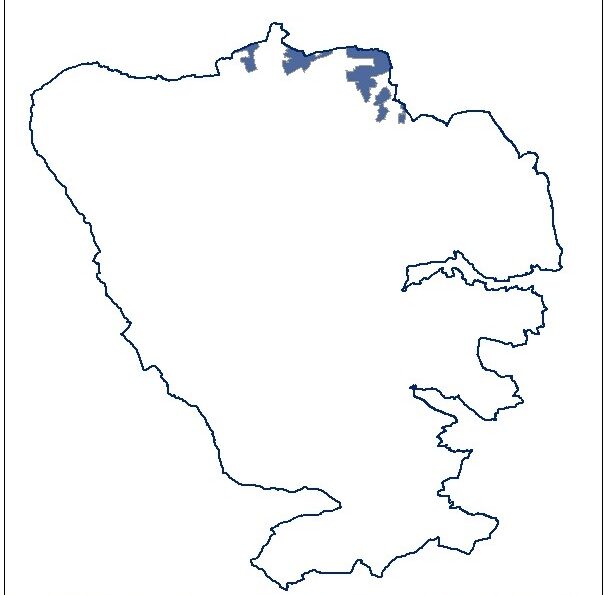
Description
An upland fringe landscape made up of broad ridges, plateaux and shallow valleys drained by tributaries of the River Tyne which form part of the Tyne Gap and Hadrian’s Wall National Character Area (NCA 11) which lies largely outside of the National Landscape. The sandstones, mudstones and limestones are overlain generally by glacial till giving rise to gently contoured slopes. Small becks and burns drain the valleys, occasionally incised in narrow denes or cleughs with occasional waterfalls. Soils are heavy and seasonally waterlogged.
A predominantly pastoral landscape of improved and semi-improved pastures with occasional rougher grazing and wet rushy pasture. Field boundaries are a mixture of dry-stone walls and blackthorn, hawthorn and holly hedgerows. Walls are made of thinly bedded, locally quarried sandstones. Hedges are dominated by hawthorn and are often tall, leggy, and supplemented by wire fences. Field systems are medium to large scale and regular and geometric in pattern, dating from the enclosure of moorland wastes in the C18th.
Tree and woodland cover are low. The landscape is generally open with sparsely scattered hedgerow oak and ash. Thin tree lines follow watercourses places. Road verges are often colonised by rowan, birch and willow scrub. Scot’s pine Shelterbelts and small plantations of pine and larch are scattered across the landscape. Corridors of scattered trees (birch and rowan) wood pasture, bracken and scrub follow incised denes.
Historically a sparsely settled landscape of isolated livestock farms and large tracts of open fell associated with agricultural villages in the adjacent valleys. Scattered farms, most dating from the period of enclosure, are often set in shallow dips in the landform and protected by shelter trees. They are connected by straight and uniform enclosure roads. Buildings are local stone with roofs of Welsh slate.
The landscape is visually open and broad in scale. Views are often shallow and defined by near horizons but there are commanding views in places across the adjacent Tyne and Devil’s Water valleys.
A remote, tranquil and sparsely settled landscape with a strongly rural character.
Measures: land management
Natural features
See Nature Recovery Section, Outcomes NR3, NR4 and NR5, for main measures relating to trees and woodland, rivers and streams and grasslands. Additional measures are listed below.
Cultural features
- Protect archaeological features by avoiding overstocking or supplementary feeding on sensitive sites.
- Conserve and maintain traditional farm buildings.
Field boundaries
- Protect, restore and maintain existing dry-stone walls and hedgerows. Renovate overgrown and gappy hedges by laying or coppicing and gapping up.
- Reinstate hedges and walls where they have been replaced by fences.
Measures: development
Agricultural buildings
- Site new farm buildings close to existing buildings where possible, and reflect their scale, character and materials.
- Reduce the impact of larger modern buildings by careful selection of colour, breaking up mass and planting screening belts of native species.
Energy, telecommunications & infrastructure
- Site telecommunications masts or close to existing buildings, tree groups or woodland edges. Avoid prominent skylines.
- Take account of visual impacts of tall structures on adjacent landscapes – particularly the moorland landscapes to the south.
Tourism & recreation
- Tourism and recreational development should be undertaken in such a way as to avoid any urbanising influence on the landscape.
- Facilities like chalets and caravan parks should only be developed where there is a high degree of year-round visual containment – either from the topography or robust woodland cover – so that they do not erode the rural character of the area.
- Equestrian facilities should be sited close to existing farm buildings where possible, and reflect their scale, character and materials. The impact of larger buildings should be reduced by careful selection of colour, breaking up mass, and planting screening belts of native woodland.