
Key characteristics
- A tract of distinctive conical hills or ‘pikes’ lying between the moorland scarp and the Eden Valley.
- Heavily folded and faulted Ordovician and Silurian shales, slates, igneous and volcanic rocks.
- Smooth slopes, largely free of glacial drift, with localised rock exposures.
- Drained by meandering becks and sikes in valleys and low ground between the pikes.
- Land cover dominated by unimproved and semi-improved grassland with extensive tracts of bracken and localised areas of heath.
- Scattered hawthorn and gorse scrub along gills, valleys and on lower slopes.
- Isolated pockets of ancient oak-birch woodland
- Open in places, and in others enclosed by large intakes defined by straight dry-stone walls and wire fences.
- Extensive grazing by hardy hill sheep.
- Few human-made features other than occasional walls and fences, sheepfolds and bields.
- Small abandoned quarries.
- Panoramic long-distance views out from high ground across the Vale of Eden to the Lake District hills and Howgill fells.
- Enclosed and more intimate in scale on low ground.
- A tranquil, remote and elemental landscape with a strong sense of place.
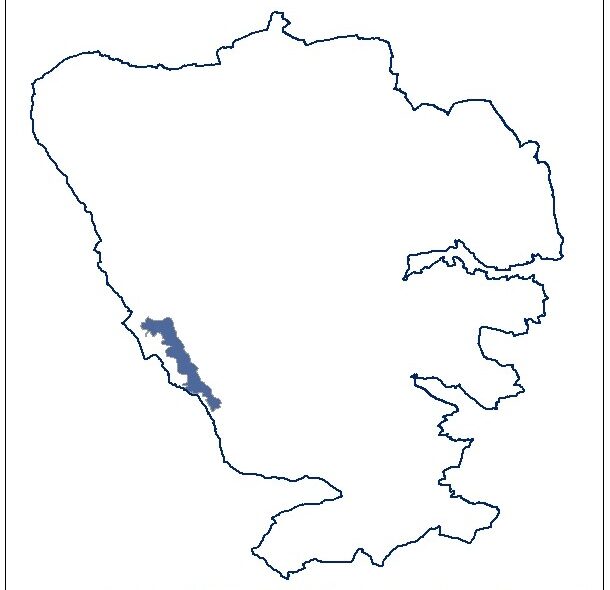
Description
A tract of distinctive conical hills or ‘pikes’ lying between the moorland scarp and the Eden Valley. The landscape is heavily influenced by the underlying geology. Heavily folded and faulted Ordovician and Silurian shales, slates, igneous and volcanic rocks of the Cross Fell Inlier are the oldest rocks in the North Pennines. The smooth slopes of the pikes are largely free of glacial drift. There are some localised rock exposures in low crags. The land is drained by meandering becks and sikes in valleys between the pikes formed by glacial meltwater following geological faults. The low ground of the valleys is locally wet with tracts of rush pasture.
Land cover is dominated by unimproved and semi-improved grassland with extensive tracts of bracken and localised areas of heath. Trees are largely absent from the pikes but there are areas of scattered hawthorn and gorse scrub along gills, valleys and on lower slopes and isolated pockets of ancient oak-birch woodland, most notably at Spring Wood at Great Rundale Beck . There are a few isolated shelterbelts and areas of recent planting of native woodland along becks and gills.
The landscape is open in character but generally subdivided and enclosed in large intakes by straight dry-stone walls and wire fences. The land is largely under extensive grazing systems, primarily with hardy hill breeds of sheep. There are few human-made features other than occasional walls and fences, sheepfolds and bields. Walls often contain a mix of rock types reflecting the geological complexity of the area. Small, abandoned quarries worked for a variety of rocks, principally for road stone, are scattered across the area.
There are panoramic long-distance views out from high ground across the Vale of Eden to the Lake District hills and Howgill fells. The landscape is enclosed and more intimate in scale on low ground. A tranquil, remote and elemental landscape with a strong sense of place.
Measures: land management
Natural features
See Nature Recovery Section, Outcomes NR3, NR4 and NR5, for main measures relating to trees and woodland, rivers and streams, and grasslands. Additional measures are listed below.
- Restructure shelter belts to soften geometric outlines. Consider removal of visually intrusive isolated plantations.
Cultural features
- Protect archaeological features by avoiding overstocking or supplementary feeding on sensitive sites.
- Conserve and enhance old quarries by avoiding tipping and managing livestock grazing sensitively.
Field boundaries
- Maintain and restore dry stone walls.
Measures: development
Energy, telecommunications & infrastructure
- Avoid the siting of tall structures such as masts, pylons and wind turbines, and vertical elements such as overhead lines, in the Moorland Fringe Pikes landscape generally and particularly on prominent skylines.
Tourism & recreation
- Manage access to avoid pressure on fragile substrates and habitats, and disturbance to breeding birds, whilst not denying access in a blanket fashion.