
Key characteristics
- High, steeply sloping escarpment
- Scarp slopes divided by valleys, some deeply incised, into discrete landmark fells
- Locally rugged terrain
- Horizontal outcrops of limestone and whinstone form steep scars, screes and stone bands
- Tracts of shake holes and occasional areas of limestone pavement
- Tumbling, rocky becks in steep sided gills
- Land cover dominated by unimproved grassland with some heath and bracken
- Thinly scattered scrub in gills and on broken ground and lower slopes
- Ancient ash woods on outcropping limestones.
- Extensive grazing by hardy hill sheep
- Few human-made features other than occasional fences, cairns or curricks and sheepfolds
- Relics of lead mining – old shafts and levels, hushes and waste heaps.
- Panoramic long-distance views out across the Vale of Eden to the Lake District hills and Howgill fells
- A remote, dramatic and elemental landscape
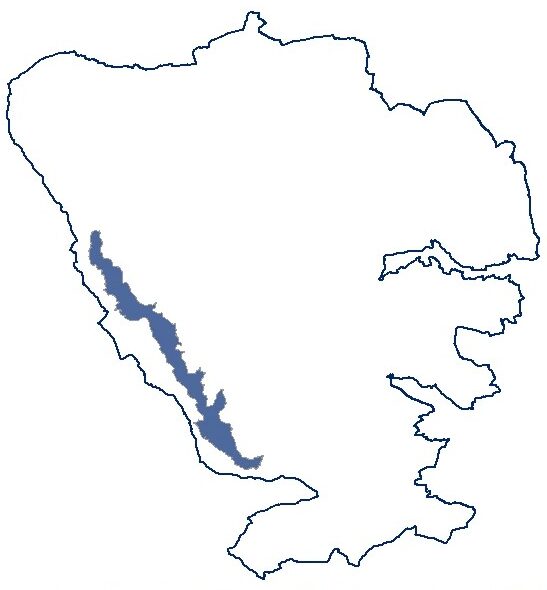
Description
Prominent escarpment on the western edge of the North Pennines falling from the high summit ridge to the upland fringe foothills. The scarp slopes are deeply divided in places by incised valleys to form discrete landmark fells with distinctive profiles. The larger valleys cutting back into the scarp, including the notable High Cup Nick, are short, steep and dramatic.
The character of the topography varies from smoothly flowing to more rugged terrain. Horizontal outcrops of limestone and whinstone form steep scars, screes and stone bands. There are tracts of shake holes and occasional areas of limestone pavement.
The slopes are drained by tumbling, rocky, becks in steep sided gills. Land cover is dominated by unimproved grass moor of calcareous and acid grassland with some localised areas of dwarf shrub heath and tracts of bracken on lower ground. Tree cover is generally sparse, with thinly scattered scrub and isolated trees in gills and on broken ground and lower slopes. There are notable tracts of ancient upland ash woodland on outcropping limestones at Helbeck and Swindale woods.
There are few human-made features other than occasional fences, cairns or curricks and sheepfolds. Relics of lead mining can be found locally, including old shafts and levels, hushes and waste heaps. The landscape is tranquil and has a remote, dramatic and elemental quality.
The scarp slopes afford rewarding panoramic long-distance views out across the Vale of Eden to the Lake District hills and the Howgill fells. The scarp is a prominent feature in views back from those uplands, and from the lowlands and upland fringes of the Eden valley.
Measures: land management
Natural features
See Nature Recovery section, Outcomes NR3, NR4 and NR5, for main measures relating to trees and woodland, rivers and streams and grasslands. Additional measures are listed below.
- Protect natural rock outcrops, screes, stone bands, limestone pavements & shake holes by preventing disturbance and stone removal
Cultural features
- Protect archaeological features by avoiding overstocking and supplementary feeding on sensitive sites
- Conserve and restore moorland structures like sheepfolds
- Conserve and repair boundary walls where significant in historic or landscape terms
- Protect and conserve lead mining features – avoid physical damage, removal or infilling, consolidate important structures; sensitively gate open shafts and adits
Measures: development
Energy, telecommunications & infrastructure
- Avoid the siting of tall structures such as masts, pylons and wind turbines, and vertical elements such as overhead lines, in the Moorland Scarp landscape generally and particularly on prominent skylines.
Tourism & recreation
- Manage access to decrease pressure on fragile substrates and avoid disturbance to breeding birds.